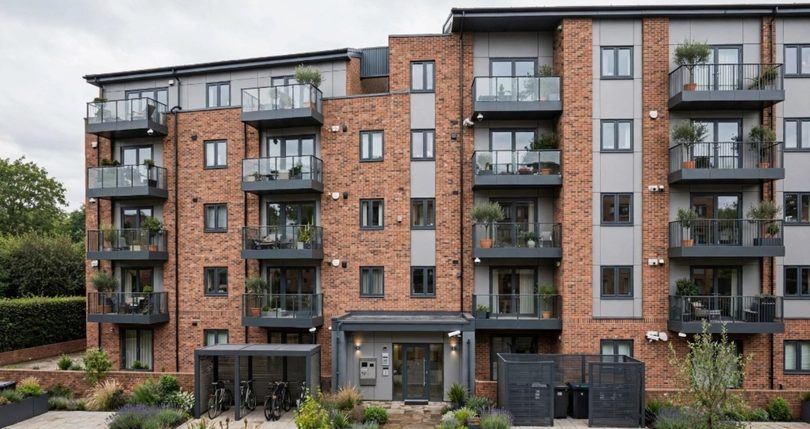

Protecting a residential building requires careful consideration, particularly when several flats share the same property. Block of flats insurance addresses the risks associated with buildings containing multiple residential units. Whether you are a freeholder, landlord or managing agent, having suitable block of flats insurance can help protect the property against a range of insured risks. The right block of flats insurance should reflect the building, its ownership and the level of cover required.
Unlike standard home insurance, block of flats insurance must consider the whole building and the interests of different parties. Falcon Insurance provides tailored property insurance solutions for different types of flat blocks and can help customers identify suitable cover.
What Is Block of Flats Insurance?
Block of flats insurance is a specialist form of property insurance intended for buildings containing multiple residential flats. It can protect the structure and other insured elements of the property against specified risks.
A block may have different ownership arrangements, tenants and communal areas, making its insurance requirements different from those of a typical house. A suitable policy can be arranged around the property’s circumstances rather than relying on a standard household insurance product.
Who Needs Block of Flats Insurance?
Who arranges buildings insurance usually depends on the ownership structure. Freeholders who own the building and the apartments within it generally need to arrange freeholder buildings insurance.
For leasehold flats, the landlord or freeholder will normally arrange the buildings insurance for the property. A leaseholder who owns only an individual flat may instead need contents insurance for their personal belongings, depending on the lease terms and the existing building policy.
What Types of Flats Can Be Insured?
Block of flats insurance can apply to different types of residential buildings. Falcon Insurance identifies two broad categories: converted flats and purpose-built flats.
Converted flats are properties originally designed for another purpose that have since been divided into separate flats. Purpose-built flats, on the other hand, were specifically designed and constructed as multiple residential units.
What Does Buildings Insurance Cover?
Buildings insurance is a central part of block insurance. It can help meet the cost of repairing or restoring insured parts of the building following covered damage.
Depending on the policy, protection may include risks such as fire, flood, theft, accidental damage and malicious damage. Other parts of the property, such as communal areas, gardens, garages, external buildings or landscaping, may also be considered for inclusion where appropriate. The exact cover depends on the policy terms, conditions, and exclusions.
Can Insurance Protect Rental Income?
Loss of rental income can be an important consideration for landlords who rely on rent from their flats. If an insured event makes part or all of the property uninhabitable, tenants may be unable to occupy the affected accommodation while repairs are carried out.
Where loss of rent cover is included in the policy, it may provide compensation for qualifying rental income losses resulting from an insured event. Always check the level of protection and applicable conditions before choosing a policy.
Why Is Bespoke Cover Important?
Every block of flats has different characteristics, ownership arrangements and insurance requirements. A one-size-fits-all policy may therefore not provide the level or type of protection a particular property needs.
Bespoke block of flats insurance allows the policy to be considered around the circumstances of the building. Falcon Insurance states that its approach is designed to help customers obtain cover suited to their requirements, so they can avoid paying for unnecessary protection while addressing relevant risks.
How Does Underinsurance Affect a Claim?
Underinsurance is an important issue for property owners. If a building is insured for less than its appropriate value, the available protection may not be sufficient to meet the full cost associated with a claim.
Falcon Insurance highlights underinsurance and the average clause as important considerations when arranging property insurance. Accurate property information and an appropriate level of cover can therefore help reduce the risk of inadequate insurance protection.
How Can You Arrange the Right Cover?
Choosing suitable block of flats insurance starts with understanding the property, ownership structure, occupation and potential risks. Freeholders, landlords, and managing agents should consider which parts of the building need protection and whether to include additional areas such as communal contents or rental income.
Falcon Insurance offers specialist block-of-flats insurance and tailored property insurance solutions. Its service includes a dedicated claims line with UK-based call handlers available around the clock. Customers can discuss their requirements with the insurer and request a quote based on their circumstances.
Overall, the right insurance can provide important financial protection for a multi-unit residential property. Reviewing the building, ownership responsibilities, building cover, contents, rental income and potential underinsurance can help property owners make a more informed decision when arranging cover.