
Retirement Is Not an Age. It Is a Number You Build Toward.
Retirement saving intimidates for one reason: the target looks enormous from the starting line. These retirement saving tips shrink it to mechanics — capture the free money first, automate a percentage that rises with your income, choose investments that match your timeline, and let compounding do the heavy lifting it demonstrably does for people who start with whatever they have. The core message, backed by every calculator you will ever run (try our Roth IRA calculator to see your own numbers), is that the start date matters more than the starting amount — and the second-best start date is this month.
Step One: Never Refuse Free Money
If your employer matches retirement contributions — contributing alongside you up to a percentage of salary — then contributing at least enough to capture the full match is not a tip; it is the highest-return financial move available to a household, an instant 50–100% return before any market movement. Order your money accordingly: match first, then high-interest debt, then broader retirement saving. If you are self-employed or your employer offers no plan, the equivalent discipline is an individual retirement account opened and automated by you — the wrapper differs by country, the principle does not. Many people leave matching money unclaimed for years out of inertia; checking your own plan’s match formula this week is the single most profitable hour in this entire guide.
Step Two: Automate a Percentage, Then Raise It on Schedule
Retirement saving succeeds as a system, not a resolution. Set a percentage of income — 10–15% including any employer match is the classic target zone, but any honest percentage you will actually sustain beats an ambitious one abandoned by March — deducted on payday, before spending adapts to the money. Then schedule the increases: one percentage point more each year, or half of every pay rise diverted before it reaches your lifestyle. This escalation is nearly painless because you never feel a cut; your spending money keeps growing, just slightly slower than your income. Automation also solves the market-timing temptation — contributions buy through booms and crashes alike, which historically has been the winning behaviour precisely because it requires none.
By Decade: What to Emphasise When
Your 20s and 30s: time is the asset. Contributions now have three to four decades of compounding ahead; even modest amounts planted early routinely outgrow much larger amounts planted late. Emphasise growth investments and simply starting — the percentage matters less than the habit existing. Your 40s: the consolidation decade. Income peaks for many; capture it — raise the percentage, use catch-up provisions where your system offers them, and clear the debts that compete with saving, applying the payoff strategy in our guide on how to pay off debt faster. Your 50s and 60s: protection and precision. Shift gradually toward stability, verify your projected income against your real spending, and make deliberate decisions about claiming ages for pensions and benefits — small timing differences compound into large lifetime ones. At every decade the same constants hold: fees eat quietly (favour low-cost funds), and the plan reviewed annually beats the plan perfected once.
How Much Is Enough? A Sane Way to Estimate
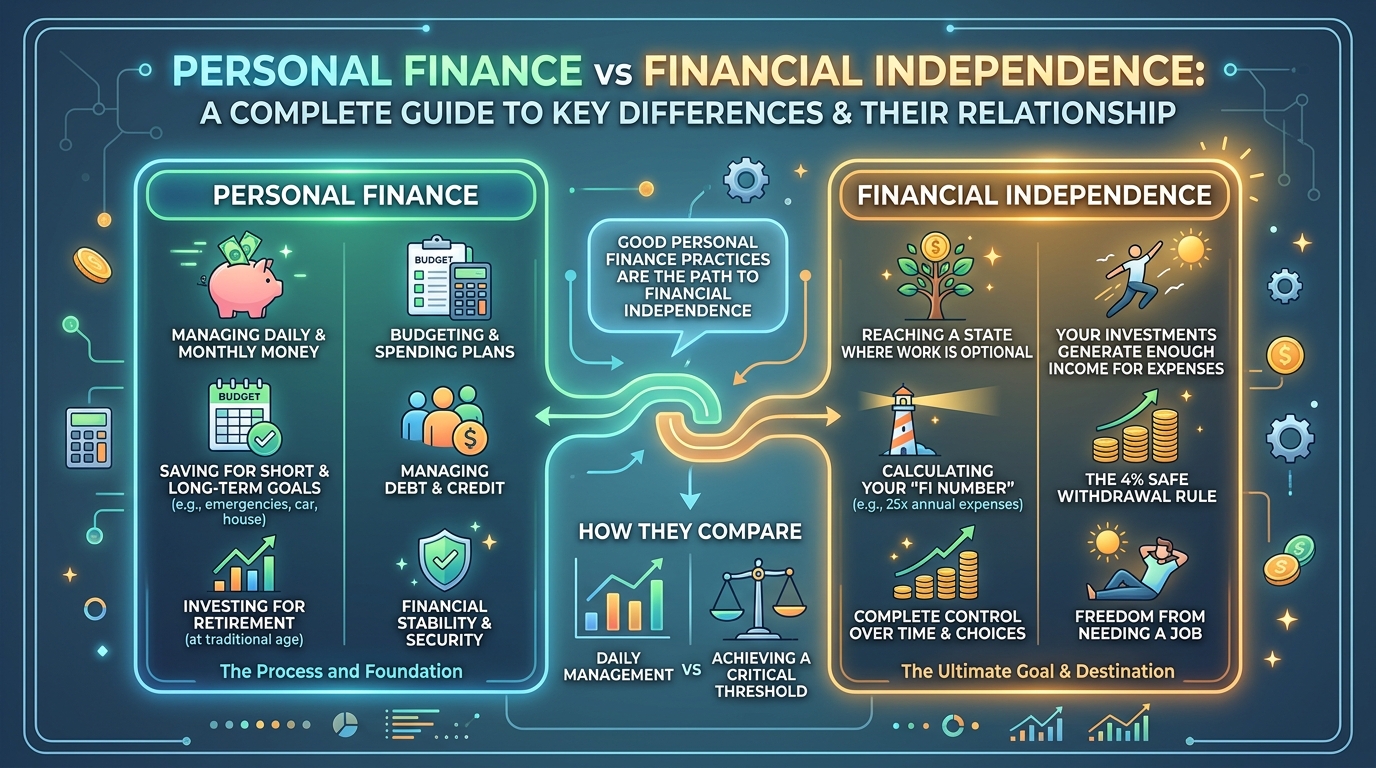
Replace anxiety with arithmetic. Estimate your retirement spending realistically — most people need less than their working income, because saving itself, commuting, and work costs stop, though healthcare and the fun you finally have time for push back the other way. A common planning frame is the 4% guideline: a portfolio of roughly 25 times your desired annual spending has historically sustained withdrawals across long retirements — treat it as a compass, not a guarantee. Then reverse-engineer: online calculators (including the Roth IRA tool linked above) will show what monthly saving reaches your number from your age, and the answer is almost always less frightening than the unexamined fear. Update the estimate every year or two; a target that moves with your life stays motivating, and motivation — sustained over decades — is the real retirement strategy.
Starting Late: The Honest Playbook
If you are arriving at retirement saving in your late 40s or 50s with little saved, ignore the content aimed at 25-year-olds and run the late-start playbook instead. Maximise the rate, not the regret: catch-up contribution limits exist precisely for you; a savings rate of 25–35% for fifteen years builds a meaningful fund, especially combined with the next lever. Extend the runway: working two or three years longer is the most powerful move in retirement mathematics — more contributions, more compounding, fewer years of withdrawals, and often a larger pension or benefit claim; it outperforms nearly every investment decision available to you. Re-aim the target: a paid-off home, part-time work in early retirement, or a lower-cost location each shrink the number you need by amounts no fund choice could. Clear expensive debt first: entering retirement with a 20% card balance is a leak no portfolio outruns. Late starts are harder, not hopeless — the playbook has fewer, bigger levers, and every one of them is within reach this year.
One final habit ties the system together: an annual retirement review, thirty minutes, same month each year. Check the balance against the estimate, confirm the contribution percentage rose on schedule, glance at fees, and adjust one thing at most. Retirement plans fail by neglect far more often than by error, and a dated annual appointment is the cheapest protection against both.
The Bottom Line
Retirement saving tips that compound: capture the full employer match, automate a percentage and raise it yearly, invest for growth early and stability late, keep fees low, and estimate your target with real numbers instead of fear. Start where you are — the mathematics forgives small beginnings and rewards early ones extravagantly.